
Thinking About Switching to LED Bulbs? Read This First
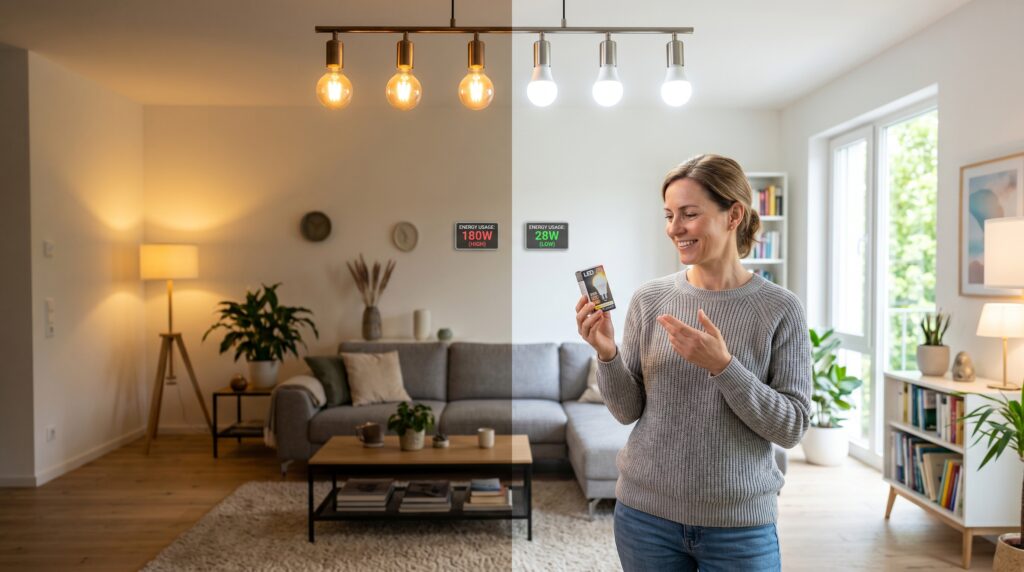
If you’re looking for a simple way to lower your electricity bill, improve your home’s lighting, and reduce the hassle of constantly replacing burned-out bulbs, you’ve probably considered switching to LED bulbs.
LED lighting has become one of the most popular home upgrades in recent years, and for good reason. Compared to traditional incandescent bulbs, LEDs use significantly less energy and can last many times longer. However, before you start replacing every bulb in your home, there are a few important things you should know.
Not all LED bulbs are created equal. Choosing the wrong brightness, color temperature, or bulb type can leave you disappointed with the results. In this guide, we’ll cover everything you need to know before making the switch so you can avoid costly mistakes and get the best value for your money.
Why Are So Many Home-owners Switching to LED Bulbs?
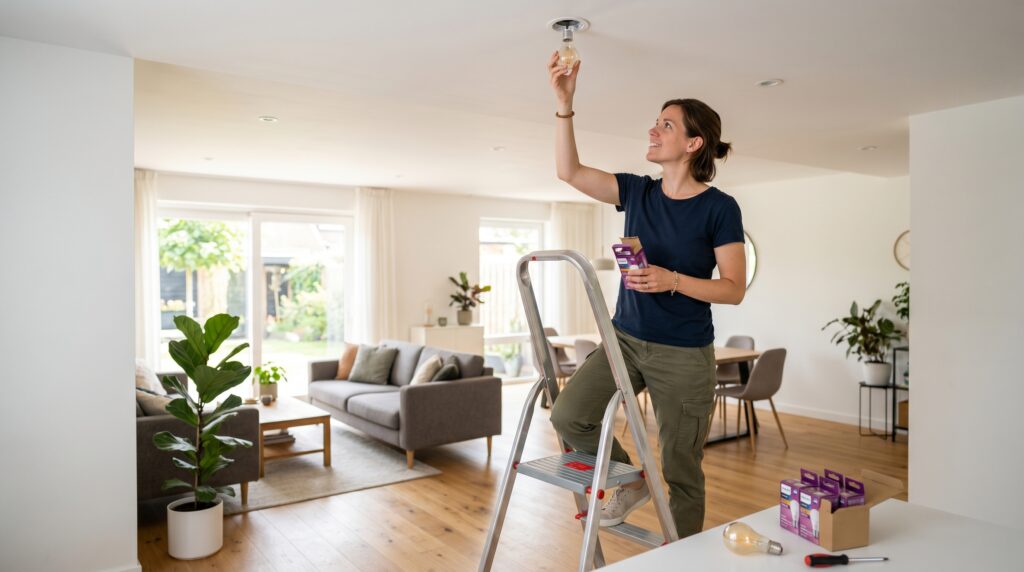
For decades, incandescent bulbs were the standard choice for home lighting. While they provide warm and pleasant light, they are extremely inefficient. Most of the energy they consume is converted into heat rather than light.
LED (Light Emitting Diode) technology works differently. LEDs are designed to produce more light while using much less electricity. As energy prices continue to rise, many homeowners are switching to LEDs as an easy way to reduce monthly utility bills.
Some of the biggest advantages of LED bulbs include:
- Lower energy consumption
- Longer lifespan
- Reduced maintenance
- Better durability
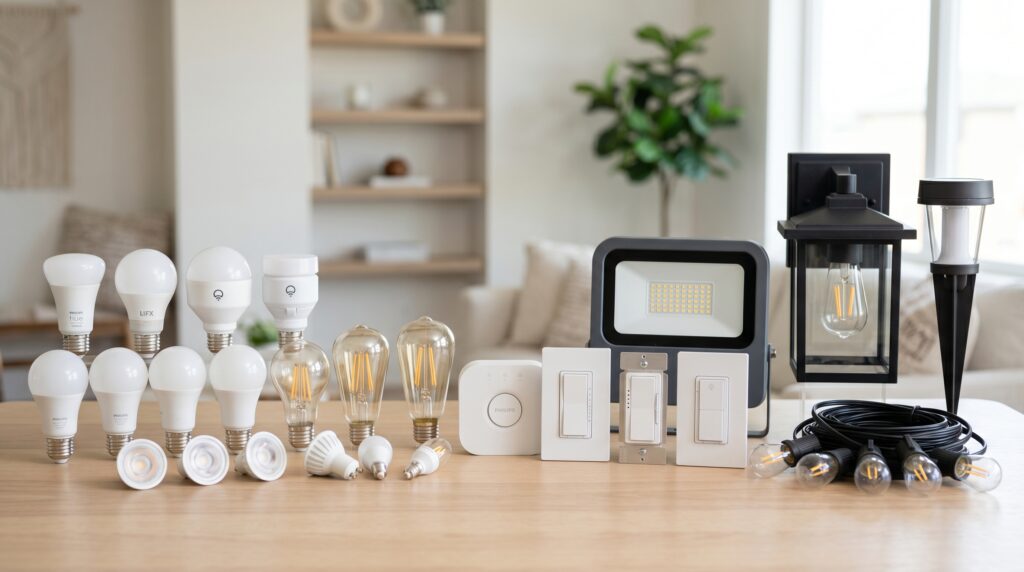
- Multiple brightness options
- Various color temperatures
- Smart home compatibility
For many households, replacing traditional bulbs with LEDs is one of the easiest and most affordable home improvements available.
How Much Money Can LED Bulbs Save?
One of the biggest reasons people switch to LEDs is the potential for long-term savings.
A traditional 60-watt incandescent bulb can often be replaced with an LED bulb that uses only 8 to 10 watts while producing similar brightness.
This means:
- Lower electricity consumption
- Reduced energy bills
- Less heat generation
- Lower cooling costs during warmer months
While LED bulbs usually cost more upfront, their longer lifespan and reduced energy use often make them much cheaper over time.
For homes with dozens of light fixtures, the savings can become noticeable over the course of a year.
Not All LED Bulbs Are the Same:
One of the most common mistakes homeowners make is assuming all LED bulbs perform the same way.
In reality, LED bulbs vary significantly in:
- Brightness
- Color temperature
- Beam angle
- Lifespan
- Smart features
- Dimming capability
Understanding these differences before buying can help you avoid frustration later.
Understanding Brightness: Lumens Matter More Than Watts
When shopping for LED bulbs, many people still look at wattage because that’s what they were used to with traditional bulbs.
However, wattage measures energy consumption, not brightness.
The actual brightness of a bulb is measured in lumens.
As a general guide:
- 450 lumens = similar to a 40-watt bulb
- 800 lumens = similar to a 60-watt bulb
- 1100 lumens = similar to a 75-watt bulb
- 1600 lumens = similar to a 100-watt bulb
If you choose bulbs based only on wattage, you may end up with rooms that feel too dim or too bright.
Always check the lumen rating before purchasing
Choosing the Right Color Temperature

Another important factor is color temperature.
Color temperature is measured in Kelvin (K) and determines how warm or cool the light appears.
Warm White (2700K–3000K)
Warm white lighting creates a cozy and relaxing atmosphere.
Best for:
- Bedrooms
- Living rooms
- Dining rooms
Cool White (3500K–4100K)
Cool white lighting appears brighter and cleaner.
Best for:
- Kitchens
- Bathrooms
- Laundry rooms
Daylight (5000K–6500K)
Daylight bulbs provide a bright, crisp appearance.
Best for:
- Home offices
- Garages
- Workshops
Many homeowners accidentally install daylight bulbs throughout the house and later wonder why their rooms feel uncomfortable. Matching color temperature to the room’s purpose can dramatically improve your home’s atmosphere.
Are Smart Bulbs Worth It?
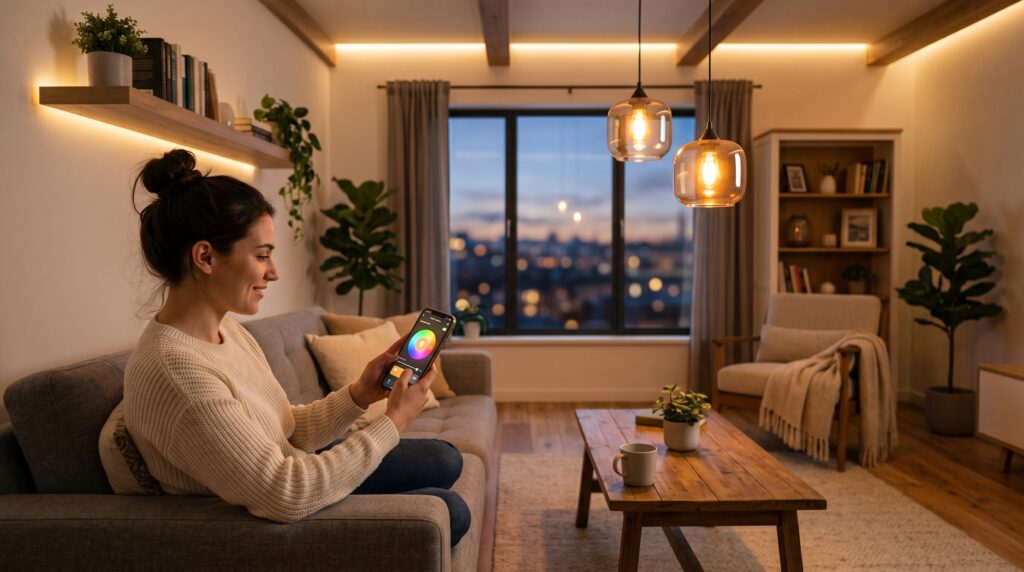
Smart bulbs have become increasingly popular in recent years.
Unlike standard LED bulbs, smart bulbs connect to your Wi-Fi network or smart home system, allowing you to control them through a smartphone app or voice assistant.
Smart bulbs offer features such as:
- Remote control
- Scheduling
- Brightness adjustment
- Color changing
- Voice control
- Automation
For example, you can schedule lights to turn off automatically when you leave for work or gradually brighten in the morning to help you wake up naturally.
While smart bulbs typically cost more than standard LEDs, many homeowners find the convenience worthwhile.
Common Mistakes People Make When Switching to LEDs
Buying the Cheapest Bulbs Available
Low-quality bulbs may offer poor color accuracy, reduced lifespan, and inconsistent brightness.
Ignoring Color Temperature
Choosing the wrong color temperature can make rooms feel uncomfortable or unnatural.
Using Non-Dimmable Bulbs with Dimmer Switches
This often causes flickering and performance issues.
Replacing Every Bulb at Once
Instead of changing every bulb immediately, test a few rooms first to see what brightness and color temperature work best.
Mixing Different Light Colors
Using warm and daylight bulbs in the same room can create an inconsistent appearance.
Final Thoughts
Switching to LED bulbs is one of the easiest and most cost-effective upgrades you can make in your home. The potential benefits include lower electricity bills, longer-lasting lighting, improved energy efficiency, and greater flexibility.
However, the best results come from choosing the right bulbs for your specific needs.
Before making the switch, take time to consider brightness levels, color temperature, dimmer compatibility, and whether smart features are worth the extra investment.
By selecting quality LED bulbs and matching them to the right rooms, you can create a more comfortable, energy-efficient home while potentially saving money for years to come.