
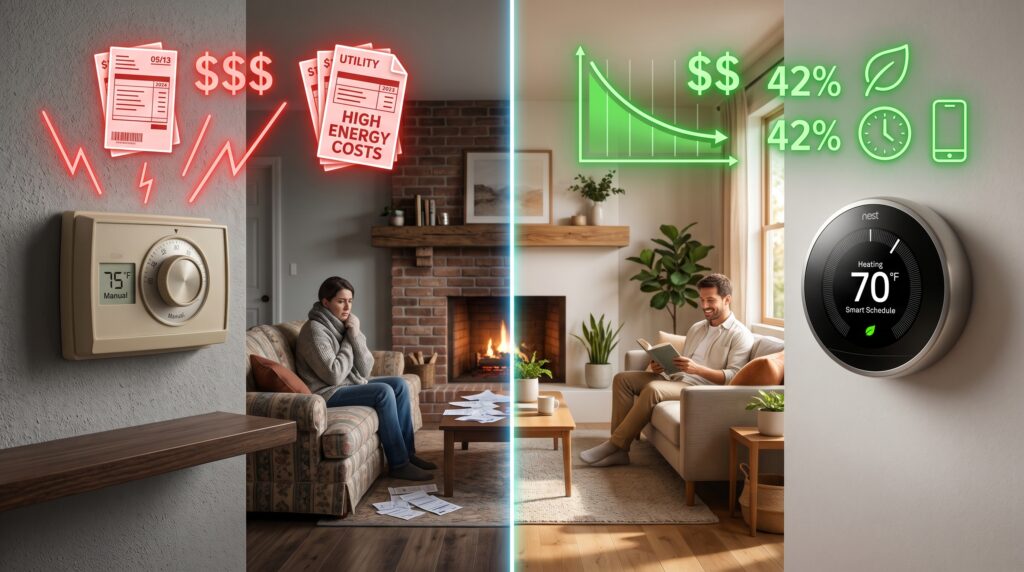
Before Buying a Smart Thermostat, Consider These Things
With energy costs continuing to rise, many homeowners are looking for smarter ways to reduce monthly utility bills without sacrificing comfort. One solution that has gained significant popularity is the smart thermostat.
These devices promise automatic temperature control, energy savings, remote access, and improved home comfort. But before you rush to buy one, there are several important factors you should understand.
Not every smart thermostat works with every heating and cooling system. Some models offer advanced automation features, while others focus on simplicity and affordability. Choosing the wrong thermostat can lead to installation issues, compatibility problems, and wasted money.
In this guide, we’ll explain everything you should consider before buying a smart thermostat and recommend products that can help you make the best decision.
Why Homeowners Are Switching to Smart Thermostats

The traditional thermostats are manually adjusted during the day. Many homeowners either don’t record settings when they leave the house or don’t follow the instructions to change them when they get home.
Smart thermostats are engineered to address this issue and provide the following:
- Automated scheduling
- The remote control is also available via smartphone apps.
- Energy usage monitoring
- Learning capabilities
- Integration with smart home systems and automations.
- Better heating and cooling usage efficiency
The right smart thermostat can help reduce energy consumption while keeping your home comfortable year-round.
Important Things to Consider Before Buying a Smart Thermostat
- HVAC System Compatibility
Some of the biggest error homeowners make is buying a thermostat without considering compatibility. There are various systems, such as:
- Central air conditioning
- Heat pumps
- Furnaces
- Boiler systems
- Multi-stage HVAC systems
Not all thermostats can be used with all setups.
It is possible that a person might purchase a thermostat that is incompatible, and will need to get extra equipment, or the thermostat will not function.
Recommended Products:
- Google Nest Learning Thermostat
- Eco bee Smart Thermostat Premium
- Honeywell Home T9 Smart Thermostat
- C-Wire Requirements
A Common Wire (C-wire) is a wire needed by many smart thermostats for continuous power supply.
This wire is not found in older homes.
Check to see if you have existing thermostat wiring or ask an HVAC professional before buying.
Failure to meet wiring requirements can make an installation a very expensive project.
Recommended Products:
- ecobee Smart Thermostat Premium
- Google Nest Thermostat
- C-Wire Adapter Kits
- Energy-Saving Features
Energy management is not a common feature of all smart thermostats.
When shopping for a new pair of shoes, search for the following:
- Occupancy detection
- Geofencing
- Smart scheduling
- Energy reports
- Eco modes
These features can assist to cut down needless heating and cooling expenses significantly.
In most cases, the more advanced the automation, the more money will be saved in the long run.
Recommended Products:
- Google Nest Learning Thermostat
- Eco bee Smart Thermostat Premium
- Honeywell Home T10 Pro
- Smart Home Integration
Compatibility is of importance if you have already had smart home devices installed.
Ask the following questions: Does the thermostat function with:
- Amazon Alexa
- Google Assistant
- Apple HomeKit
- SmartThings
- Other automation platforms
If you have an existing home network, it will provide a much more seamless experience with a thermostat that has been integrated into it.
The selection of an unsuitable ecosystem can restrict future smart home changes.
Recommended Products:
- Eco bee Smart Thermostat Premium
- Google Nest Learning Thermostat
- Amazon Smart Thermostat
- Remote Sensors
Room temperatures may be quite different from one room to another.
A few clever thermostats have the capability to use remote sensors to track temperature and occupancy in other parts of the house.
This provides a more precise control of comfort level.
If your thermostat isn’t equipped with sensors, it can only optimize comfort at one location.
Recommended Products:
- Eco bee Smart Sensors
- Honeywell Home T9 Smart Thermostat
- Honeywell Home T10 Pro
- Ease of Installation
There are also some models that can be set up by yourself and others that need professional set up.
Before purchasing, consider:
- Wiring complexity
- HVAC compatibility
- Mobile app setup
- Calibration requirements
Installation may be made simple and it could be cost effective as well.
Recommended Products:
- Google Nest Thermostat
- Amazon Smart Thermostat
- Honeywell Home T5 Smart Thermostat
- Long-Term Cost vs Savings
Smart thermostats come in a variety of prices.
Energy-saving features might be fewer in the less expensive model, and more in the higher quality model, though premium models are often more automatic and convenient.
Consider:
- Purchase price
- Installation costs
- Potential utility savings
- Warranty coverage
The lowest price is not always the most cost-effective in the long-term.
Common Mistakes People Make
These are the most common mistakes made by many buyers:
- Failure to check HVAC compatibility is a problem. A lack of HVAC compatibility checking is an issue.
- Ignoring C-wire requirements
- Purchase made on price ONLY
- Picking attributes that they do not apply to anything in their lives.
- Viewing smart home integration installing remote sensors in large homes is possible without any problem.
- Underestimating installation complexity
By avoiding these, you can save frustration and money.
Practical Solutions before Purchasing
When considering purchasing a smart thermostat
Step 1
Determine the type of HVAC system you are using.
Step 2
Look at existing wiring around thermostat.
Step 3
Choose the smart home platform to use.
Step 4
Decide if you should have remote room sensors.
Step 5
Plan a reasonable budget according to the features and not just the cost.
Step 6
Please read the compatibility information carefully when ordering.
These measures will help you choose a thermostat that you will get value for.
Best Smart Thermostats You Can Consider
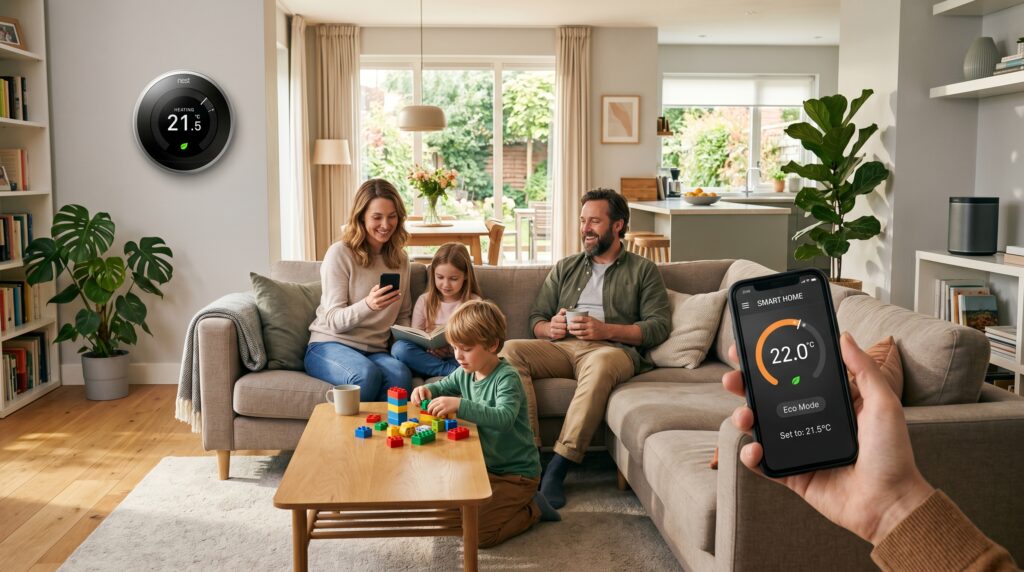
Some of the most common smart thermostat products available:
Google Nest Learning Thermostat
Best Overall
Pros:
- Asks and records your appointments automatically
- Strong energy-saving features
- Excellent app experience
Cons:
- Premium price
Eco bee Smart Thermostat Premium
Best for Larger Homes
Pros:
- Includes advanced sensors
- Excellent smart home integrations
- Strong comfort management
Cons:
- Higher upfront cost
Amazon Smart Thermostat
Best Budget Option
Pros:
- Affordable
- Easy Alexa integration
- Simple installation
Cons:
- Fewer advanced features
Honeywell Home T9
Best for Room-by-Room Comfort
Pros:
- Smart Room sensor compliant.
- Reliable performance
- Flexible scheduling
Cons:
- The more sensors the more expensive.
Google Nest Thermostat
Best Value Option
Pros:
- Faster than Nest Learning Thermostat to install
- Easy setup
- Good energy-saving features
Cons:
- Fewer automation capabilities

Final Recommendation
While smart thermostats can be a worthwhile investment, you need to ensure that you select the right kind of the thermostat for your home for the HVAC system.
For those who are new to smart homes, first consider compatibility and wiring up requirements before making feature comparisons.
Best Beginner Setup:
- Google Nest Thermostat (easy and inexpensive)
- Optional room sensor as required
- There will be voice control with the smart speaker.
- Voice control will be available with the smart speaker.
If you want the most comprehensive solution for maximum comfort and energy savings at home, the Eco bee Smart Thermostat Premium is still one of the best options.
With a little research prior to purchase, you can minimize compatibility problems, save on energy costs, and be able to enjoy a smarter, more comfortable home for years to come.